


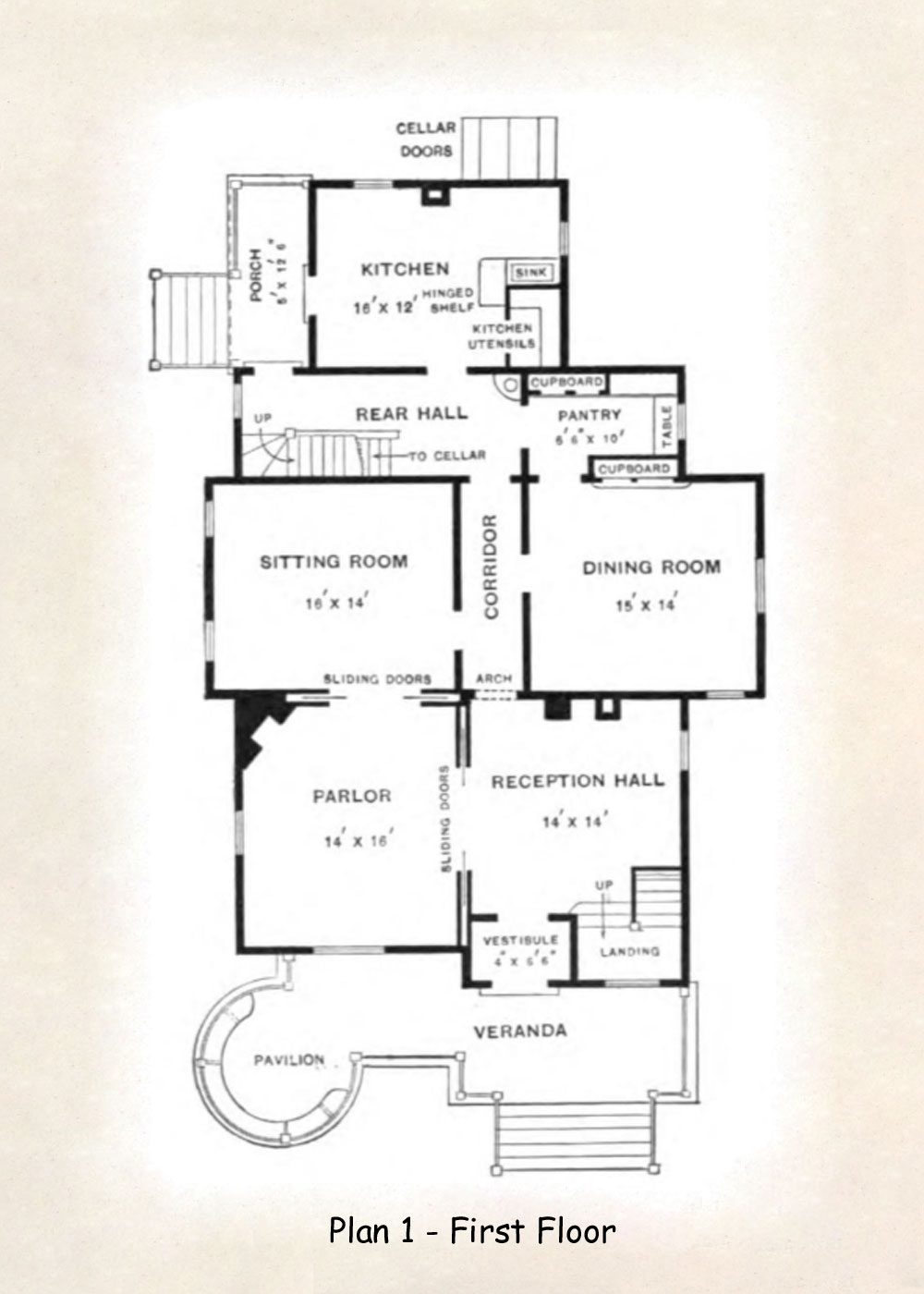
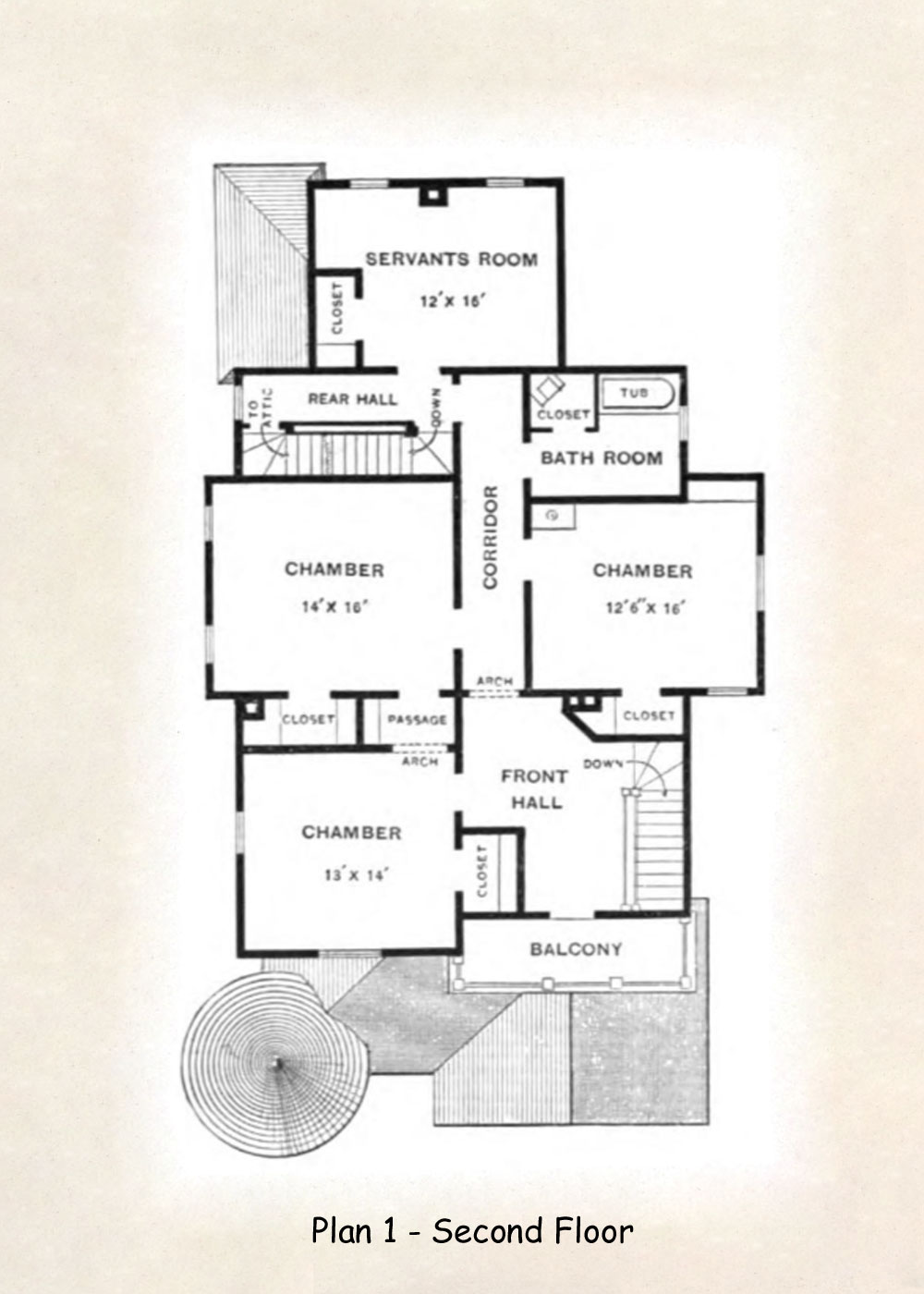
The drawings illustrating a southern residence which we present in this issue are likely to prove interesting to those of our readers who have been making inquiries with regard to the arrangement of dwellings adapted for erection in the section of the country indicated. The residence here shown was built a short time ago for Mr. C. P. Allen of Knoxville, Tenn., from plans prepared by architects George F. Barber & Co. of that city. The floor plans show an arrangement of rooms to meet special requirements, and indicate many features which invite interesting study on the part of those connected with the building trades. Provision is made on the first floor for four commodious apartments, not including the reception hall, which is as large as some of the other rooms in the house. It will be seen that there are two halls, and that the front door may be reached from the kitchen without the necessity of passing through any of the principal rooms on that floor. At the left of the reception hall, as one enters the house, is the parlor, which communicates with the sitting room beyond by means of sliding doors. The dining room is across the hall or corridor from the sitting room, and communicates with the kitchen through a good-sized pantry and a rear hall. The kitchen is so placed as to be entirely cut off from the front portion of the house, and the second floor can be reached from it by means of the rear stairs. The kitchen is arranged with a view to economizing space and is provided with the modern fixtures. The pantry, between the kitchen and the dining room, is six and one/half by 10 feet in size, well lighted and fitted with the usual equipment. The china cupboard opening into the dining room affords ample space for the purpose, the construction being clearly indicated by means of the details presented in connection herewith. On the second floor of the house are three large sleeping rooms, a bathroom, and directly over the kitchen a servants' room. Each chamber has opening from it a commodious wardrobe or closet, while the arrangement of the bathroom involves a feature which cannot fail to be appreciated by those who consider details of convenience. The position of the rear stairs is such that the servants can pass from the kitchen to their room on the second floor without the necessity of entering the front portion of the house or even the corridor extending through its center. The house of Mr. Allen, represented in general view by means of our supplement plate, is located on a center lot and the side elevations are therefore more or less plain, the principal ornamentation being found at the front. A veranda extends across the entire front and is of substantial and heavy construction, while the balcony at the second floor adds variety to the dwelling. The foundations of the house are of brick, the exterior walls sheeted and papered, while the roof is covered with shingles. The interior finish of the first floor is in natural Georgia pine, while the rooms of the second floor are painted. The cost of the house here shown, including mantels, grates, and hearths, was $3,400, although the author states that this figure will vary with locality. The same set of floor plans was used for a brick-veneer residence for a gentleman in Dover, N.J., the cost in that case being about $5,000.
Seen in the 1893 October edition of the magazine "Carpentry and Building". Street address came from the 1894 city directory and was confirmed by the 1903 Sanborn map.